
Teams often list the website beside email, paid search and social media. The spreadsheet looks tidy. The thinking is wrong.
A channel carries a message to an audience. A website does that, but it also stores durable content, receives demand from other channels, captures intent, supports service, feeds analytics and connects to customer systems. It is closer to infrastructure than a campaign surface.
Every campaign eventually meets the site
An ad can earn attention. An email can prompt a return visit. A social post can create curiosity. In many organizations, the website is where those fragments become a coherent experience: the visitor verifies the claim, compares options, reads policy, completes a form or decides to leave.
That makes site quality a shared dependency. A slow template, confusing navigation or broken form does not create a “web problem.” It weakens every campaign that sends people there.
Infrastructure changes the management model
Campaigns have start dates and end dates. Infrastructure accumulates decisions. Content models, redirects, analytics events, consent rules, accessibility standards and integrations keep affecting work long after the original project team has moved on.
Organizations therefore need ownership that survives redesigns. Someone must protect information architecture, publishing standards, measurement definitions and technical health. Treating the site as a sequence of rebuilds guarantees expensive rediscovery.
Ownership does not mean doing everything yourself
External partners can design, build and improve a site. Internal ownership means the organization retains control of its domain, accounts, data, source files, priorities and operating knowledge. Vendors should extend capability, not become the only people who understand how the machinery works.
Google’s SEO guidance is aimed at site owners for a reason: discoverability depends on continuing maintenance, accessible resources and clear content. Those are operational duties, not launch-day tasks.
A better planning question
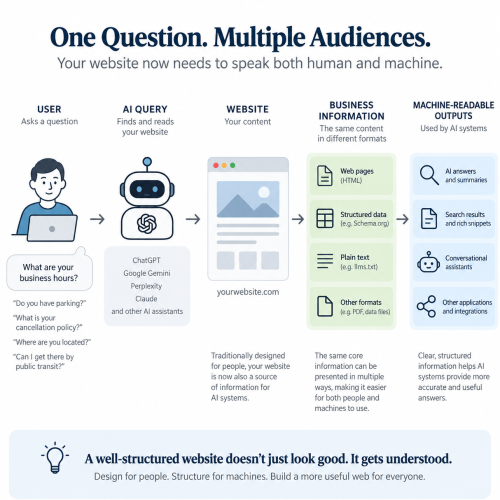
Instead of asking, “What should the website campaign do?” ask, “What capabilities must the website provide to every campaign and customer journey?” The answer will include more than pages. It may include reusable content, structured data, reliable forms, consent handling, CRM connections and a measurement layer.
Once the site is treated as infrastructure, funding and governance begin to make more sense. Maintenance stops looking like an annoying residual cost. It becomes the price of keeping marketing’s owned foundation useful.